
How to Evaluate Meme Coins for Long-Term Growth Potential

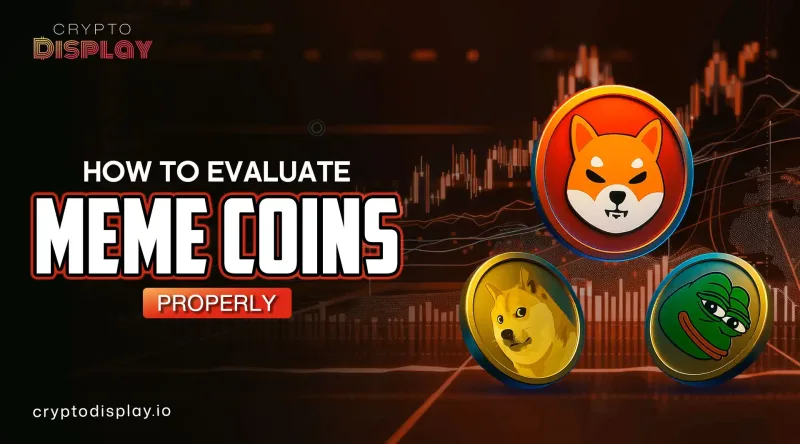
How to Evaluate Meme Coins and Avoid Common Investor Mistakes
Meme coins are everywhere right now. Some people made huge profits from them. Others lost everything overnight. The big difference? Knowing how to evaluate meme coins properly before putting in your money.
Meme coins started as jokes. But today, coins like Dogecoin (DOGE) and Shiba Inu (SHIB) have billions of dollars in market value. New meme coins pop up every single day. Most of them fail. But a few of them go on to make early buyers very rich.
So how do you know which ones are worth a look? That is exactly what this guide will show. You will learn how to check a memecoin before you invest in simple steps.
If you want deeper insight into why meme coins trend in the crypto market, it helps to understand the psychology and hype cycles that fuel these sudden price moves.
What Is a Memecoin?
A meme coin is a type of cryptocurrency that started as a joke or internet trend. These coins are usually inspired by funny memes, popular culture, or viral moments online.
Unlike Bitcoin or Ethereum, most meme coins have no real-world use. They are driven mostly by hype, community excitement, and social media trends. This makes them very risky — but also very exciting for traders.
If you are unsure whether hype-driven tokens suit your risk level, explore this memecoin vs utility token comparison for beginners before deciding.
Step 1: Check the Community Behind the Coin
The community is the heart of any memecoin. A strong and active community can push a coin's price up fast. A weak community means the coin will likely die.
Where to look:
- Twitter (X)
- Telegram
- Discord
Ask yourself these questions:
- Are real people talking about this?
- Is the conversation growing day by day?
- Do members share news, memes, and updates regularly?
Watch out for bots. If a project has 50,000 followers but barely any likes or comments, those followers might not be real. Real communities are loud, active, and full of questions.
A good rule: No community = No future.
Step 2: Look at the tokenomics.
'Tokenomics' means how the coin is built from a money point of view. It tells you how many exist who own them and how they move around.
Key things to check:
- Total Supply – How many coins are there in total? Very high supply can mean low value per coin.
- Circulating Supply: How many coins are available to buy and sell right now?
- Who Holds the Coins? - Use tools like Etherscan or BSCScan to see the top wallet holders. If one or two wallets hold 30% or more of the supply, that is a red flag. They can dump all their coins at once and crash the price.
- Burn Mechanism — Some meme coins burn (destroy) a small amount of tokens regularly. This reduces supply over time and can help the price grow.
Pro Tip: Go to DEXTools or TokenSniffer to quickly check the token distribution.
Before investing, you should also check meme coin tokens, including presales, ICOs, IDOs, and exchange launches.
Step 3: Find the Team or Developers
Many memecoin teams are anonymous. That is normal in crypto. But you still want to see some level of transparency.
Look for:
- An official website
- A whitepaper or roadmap (even a simple one)
- Active developer updates on GitHub or social media
- A team that responds to community questions
If there is zero information about who built the coin, be extra careful. Anonymous teams are not always bad, but they do carry more risk. Some of the biggest crypto scams were done by hidden teams who disappeared after raising money — this is called a rug pull.
Step 4: Check the Liquidity
Liquidity tells you how easy it is to buy or sell a coin without changing its price a lot.
Low liquidity is dangerous. It means if you try to sell your coins, there may not be enough buyers. The price can also be manipulated easily.
How to check liquidity:
- Go to DEXScreener or DEXTools
- Search the coin name or contract address
- Look at the liquidity pool size
A healthy memecoin should have at least $100,000 to $500,000 in liquidity. Also check if the liquidity is locked. Locked liquidity means the developers cannot pull the funds and run away.
You can verify locked liquidity on platforms like Mudra, Team Finance, or Unicrypt.
Step 5: Spot the Red Flags (Scam Warning Signs)
Not every memecoin is worth your time or money. Some are built only to steal your funds. Here are the biggest red flags to avoid:
- Honeypot contracts — You can buy the coin, but you cannot sell it. Always test with a small amount first or use tools like Honeypot.is.
- Copied whitepapers — Some teams copy-paste content from other projects. Always search key phrases from their whitepaper online.
- No audit—Real projects get their smart contract audited by third parties. Look for audit reports from companies like CertiK, Hacken, or Solidproof.
- Sudden celebrity mentions without proof — Scammers mostly fake Elon Musk or other celebrity tweets to pump a coin.
- Unrealistic promises — "1000x guaranteed!" is a lie. No one can guarantee returns in crypto.
Step 6: Study the Chart and Market Activity
Look at the price chart before you buy. You do not need to be an expert to notice simple things.
- Is the price rising steadily or jumping up and down wildly?
- Did the price pump 10,000% in one hour? (That might mean someone is manipulating it.)
- Are there regular buy and sell patterns, or does it look random?
Also look at trading volume. High volume means more people are trading the coin. Very low volume means almost nobody is interested.
Use CoinGecko, CoinMarketCap, or DEXScreener to track charts and volume.
Step 7- Understand the Trend and Timing
Memecoins live and die on trends. A coin tied to a trending meme, viral moment, or popular topic can rise fast. But once the trend dies, so does the coin.
Ask yourself:
- Is this coin riding a current trend?
- Is the hype fresh or is it already dying down?
- Are influencers just starting to talk about it, or are they done talking?
Buying early in a trend is better than buying late. If everyone already knows about a coin, you may be the last buyer, and that is risky. Studying top meme coins getting attention in 2026 can help you spot patterns before jumping into a new project.
Final Thoughts
Meme coins can make you rich. They can also wipe out your investment in hours. The key is to do your homework before you buy.
To recap, always
- Check the community strength.
- Study the tokenomics.
- Research the team.
- Verify the liquidity.
- Look for red flags and scam signs.
- Analyze the chart and volume.
- Understand the trend timing.
Never invest money you cannot afford to lose. Start small. Learn as you go and always stay curious because in crypto, knowledge is your best protection.
Disclaimer
This article is for educational purposes only and does not constitute financial advice. Always do your own research (DYOR) before investing in any cryptocurrency.



Frequently Asked Questions
 Explore Our FAQs
Find quick answers to commonly asked questions and understand how things work around here.