
PoW vs PoS: Simple Guide to How Blockchain Consensus Works

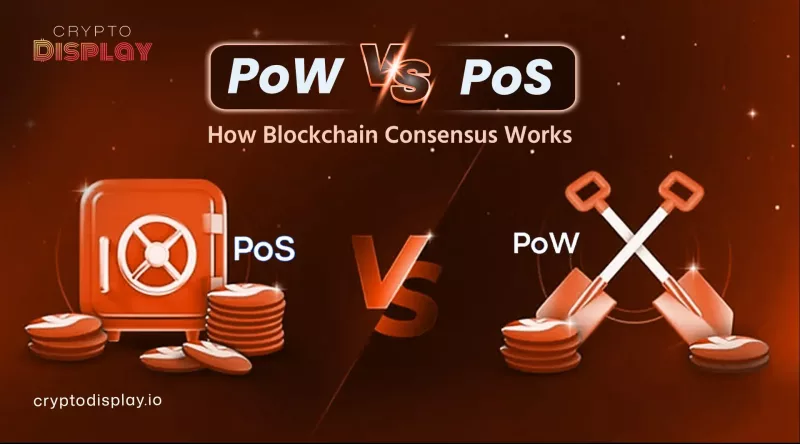
How PoW vs PoS Help Blockchains Stay Safe, Fair, and Easy to Use
When people talk about crypto and blockchain, they often use big words that sound scary. But the truth is, the idea behind these systems is not that hard. In this blog, we will look at two very famous ways a blockchain keeps itself safe: PoW vs PoS.
Both are ways to make sure every block added to the chain is true and not fake. Think of it like a teacher checking homework to see if it is right. But each system checks in a different way. So let’s break this down in very simple words.
What is blockchain?
So, before we get into PoW vs PoS, we really need to get a handle on what a blockchain actually is. Think of a blockchain as a really long notebook. This notebook is filled with lots of blocks, and each block holds some information. When a new chunk gets added, it's chained to the one that came before it. And here's the cool part: once a block is in there, you can't change it, which is what makes the whole thing secure. But to keep it secure, we need a way for everyone to agree on which block is the real deal. That's where this thing called consensus comes in.
What is consensus?
Normally, when you send money to someone, your bank allows it. But with a blockchain, there's no bank involved. Instead, the network itself verifies the transaction. A group of computers team up to make sure the new group of data is accurate. Once they all agree, that block gets attached to the chain. This whole process of agreeing is known as consensus.
Proof-of-Work is the older method. Bitcoin uses it, and it has been around for a long time. In this system computers called “miners” try to solve math puzzles. These puzzles are very hard and need a lot of power. The computer that solves the puzzle first gets to add the next block. The miner also earns a reward.
What is Proof Of work
Proof of Work was the very first major method used by blockchains and Bitcoin still uses it, along with a bunch of other older ones.
In Proof of work system the folks who keep the network running are called miners. They use their computers to tackle these super tough math problems that require a lot of energy. Whoever's computer cracks the puzzle first gets to add the next block of data to the chain.
How it works
Imagine Proof-of-Work as a super tough math problem. Lots of computers are racing to crack it. Whoever figures it out first gets a prize and gets to add the next piece to the blockchain. These computers are known as miners. The winner gets a rewards.
Why it is safe
- The puzzles are super hard.
- Cheating takes a lot of money and power.
- Many computers check the work.
It is very tough for one person to take over the network.
Why it has problems
- The puzzles take time.
- It needs a lot of electricity.
- Computers get hot and need strong parts.
This is the reason many new blockchains moved away from old system.
What is Proof of stake
Proof of Stake is a newer method. Many modern blockchains use it, such as Ethereum (after its upgrade), Solana, and others. Instead of solving puzzles, people help run the network by locking up coins. This is called staking. The more coins you stake, the higher your chance to add the next block. People who stake coins are called validators, not miners.
How it works
With proof-of-stake, you don't have to figure out puzzles. Instead, folks put up some of their coins as a "stake." Whoever has coins locked in might get chosen to create the next block. These folks are known as validators.
Why it is Safe
- Validators have coins at risk.
- If they cheat, they lose their stake.
Many validators keep the system clean. - It is hard for one person to buy the complete network.
Which one is better (PoW vs PoS)
PoW Vs PoS are both solid choices for keeping a blockchains secure, but they each shine in different areas.
Proof of stake is good at:
- Rock-solid security
- Being extremely difficult to hack
- Its straightforward concept
Proof of stake is great for:
- Speedy operations
- Lower operating costs
- Being environmentally friendly
You'll find that a lot of newer blockchains are opting for Proof-of-stake. Ethereum itself switched from Proof of work to Proof of stake, aiming for better speed, a smaller environmental footprint, and a more user-friendly experience.
Why do PoW vs PoS matters
These systems are pretty important because digital money is really taking off. More and more folks are jumping on board with crypto and blockchain stuff. To make sure these apps are secure, we need solid systems in place to prevent scams and keep everyone's information safe.
PoW Vs PoS are key to making blockchains:
- Secure
- Trustworthy
- User-friendly
- Accessible to everyone
If we didn't have these PoW vs PoS systems, people could mess with the data, and nobody would have any trust in crypto.
Some real life examples
Bitcoin, the pioneer of cryptocurrencies, relies on Proof-of-Work, which makes it very secure but not very fast.
Ethereum, using Proof-of-work in the starting phase, but has shifted to Proof-of-Stake. This change has made Ethereum quicker, more affordable, and more environmentally friendly, allowing it to support a wider range of applications.
Final thoughts
PoW vs PoS may sound like big tech terms, but the idea behind them is simple. Both (PoW vs PoS) ways help a blockchain to agree on what is true. Proof-of-work uses puzzles. Proof of stake uses locked coins. Both keep data safe. Both help blockchains grow. As crypto becomes more common, learning these simple ideas will help you understand how the system works. You do not need to be an expert. Even a kid can understand it when explained in easy words.