
Trending Gaming Tokens in 2026: DinoX, HOPEUM, and More

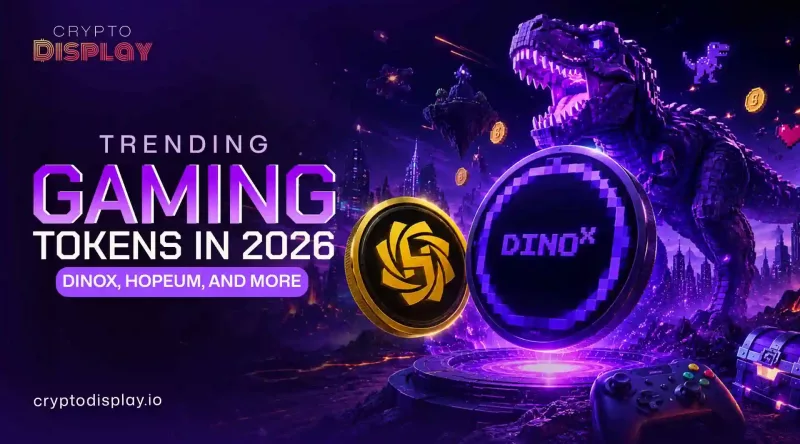
Which Trending Gaming Tokens Are Worth Watching in 2026? DinoX, HOPEUM
The race for attention in blockchain gaming is moving fast in 2026. Several new projects are building games, digital economies, and player reward systems that connect traditional gaming with crypto assets.
These projects are attracting attention because they combine gameplay with token utility. Players are no longer just spending money inside games. They can earn, trade, and use digital assets across growing ecosystems.
Among the Trending Gaming Tokens gaining visibility are DinoX, INOA GAMES, Bluff Arena, Skyfleetdash, and HOPEUM. Each project is approaching blockchain gaming differently, with unique features designed for players, collectors, and crypto users.
1. DinoX ($DINO)
DinoX is not trying to be the biggest NFT game. It's trying to be a working one. Built on Binance Smart Chain, the project runs a dinosaur-themed ecosystem where players breed, battle, and own land. The DinoX token connects all three verticals, so demand doesn't depend on just one game mode surviving.
Breeding is the stickiest mechanic. Players combine two NFT dinosaurs to produce a new one with inherited traits. Rarer outputs command real market prices, which keeps transaction volume alive even outside battle seasons.
Key Features
- NFT Breeding with Trait Inheritance- Breeding costs DNXC and produces unique offspring. The rarity curve is designed to slow inflation, unlike earlier GameFi projects that let supply run unchecked.
- Three-Mode Gameplay Loop- PvP battles, PvE quests, and land management all use the same token. Players who prefer one mode still generate demand that benefits others.
- Land as a Revenue Layer- Virtual land plots produce resources over time. Players lease or sell those resources on-chain. It's passive income tied to actual platform activity, not staking APY pulled from thin air.
The project isn't new. But its updated economy design is getting a second look from players burned by earlier P2E models.
2. INOA GAMES: Platform Play, Not Single-Title Risk
Most GameFi tokens die when their one game goes quiet. INOA GAMES built around that problem from the start.
The INOA GAMES token runs across multiple titles on the same platform. So if one game loses players, the others keep the token economy moving. That's the thesis, and it's structurally smarter than anything the 2021 wave tried.
Developers can plug their games into INOA's SDK, which means the game catalog can grow without the core team building every title. That's a different kind of growth engine.
Key Features
- Cross-Title Token Flow- INOA works inside every connected game on the platform. Earnings in one title are spendable in another. This creates real switching behavior instead of dead-end single-game wallets.
- Open Developer Integration- Third-party studios can integrate via the SDK. More games mean more utility touchpoints for the token, which is not something most gaming tokens have ever figured out.
- Staking Tied to Platform Fees- Stakers receive a cut of transaction fees across all platform games. Yield comes from actual activity, not from printing new tokens to pay holders.
INOA is playing infrastructure, not games. That's harder to execute but the ceiling is higher.
3. Bluff Arena: Poker on Chain, Rake Goes to Token Holders
Skill-based gaming is one of the few crypto gaming models that makes economic sense. Bluff Arena is betting on that.
The platform runs poker and card game tournaments with on-chain settlement. Every deal is verifiable. Every payout is automatic. The rake that would normally go to a house gets distributed to token holders instead.
Traditional poker platforms have trust problems. Centralized servers, opaque RNG, disputed outcomes. Bluff Arena removes all of that from the equation.
Key Features
- On-Chain Provable Fairness- Card outcomes are generated and verified by smart contract. Players can audit any hand. This is the feature that traditional online poker has never been able to offer.
- Tournament Infrastructure- Scheduled and on-demand tournaments run with crypto prize pools. Entry, prize distribution, and fees all settle without a middleman.
- Reputation-Linked NFT Avatars- Avatars carry win history and reputation scores across tournaments. High-rep players unlock higher-stakes tables. It creates identity in a space where most platforms treat every wallet as anonymous.
Bluff Arena is targeting a specific user who already gambles online and already holds crypto. That overlap is larger than most people realize.
4. Skyfleetdash: Racing Game That Pays Winners, Not Just Participants
Flat participation rewards broke play-to-earn. Skyfleetdash doesn't flatten. Top finishers earn more. Lower placements earn less or nothing. That sounds harsh, but it's actually what keeps token economies healthy. When everyone earns equally, supply explodes and price collapses. Skyfleetdash skips that.
The game puts players in space-racing fleets assembled from NFT ships. Ship stats affect race outcomes. A better fleet isn't just cosmetic.
Key Features
- Competitive Race-to-Earn- Token payouts scale with race ranking. This creates genuine competition and real demand for high-stat ships, which feeds the NFT market organically.
- Modular Fleet Building- Ships have individual stat profiles that combine differently depending on race type. Players can't just buy one expensive ship and win everything. Strategy matters.
- Resource Zone Mining- Between races, idle fleets extract on-chain resources used for upgrades or resold. Downtime is still economically useful, which extends daily active time on the platform.
Skyfleetdash is newer than the others on this list. The tokenomics design is getting analyst attention, but live player data is still early.
5. HOPEUM: Sports Prediction Meets On-Chain Stakes
HOPEUM is chasing a crossover that nobody has fully cracked: sports fans who want real stakes on their predictions but don't want to use an offshore betting site.
The crypto platform runs fantasy sports leagues and weekly prediction contests. HOPEUM is the entry token. Accurate predictors share from a prize pool. Token holders vote on which sports get added and how pools are structured.
The user base is theoretically huge. Most sports fans understand prediction markets. Getting them on-chain is the hard part.
Key Features
- Weekly Prediction Leagues- Players stake HOPEUM to enter sports prediction contests. Top performers each week take the largest share. There are no guaranteed returns, which keeps the economy honest.
- Fantasy League Settlement on Chain- Full fantasy sports seasons run with automatic on-chain payouts at the end. No disputes, no delays, no platform discretion over who wins.
- Holder Governance Over Platform Direction- HOPEUM holders vote on new categories, prize pool splits, and platform upgrades. It's not just a governance token in name. Votes have actually shifted product decisions.
The risk for HOPEUM is seasonality. Token demand spikes during major sports seasons and goes quiet in off-months. That pattern is worth watching.
What These Five Have in Common
None of these tokens are trying to be the next Axie Infinity. That's actually a good sign. Each one has a defined token utility loop. Each one earns through performance or platform activity, not inflation. And each one is building in a specific niche rather than claiming to replace all of gaming.
That's not a guarantee of anything. Execution still matters. Active user counts still matter. But the design logic is cleaner than what came before.
Disclaimer
Trending Gaming Tokens is for informational purposes only. Nothing here is financial advice. Crypto assets carry high risk. Do your own research before buying any token.
Frequently Asked Questions
 Explore Our FAQs
Find quick answers to commonly asked questions and understand how things work around here.