
What Is Chainlink (LINK)? How It Works, Uses and Risks Guide

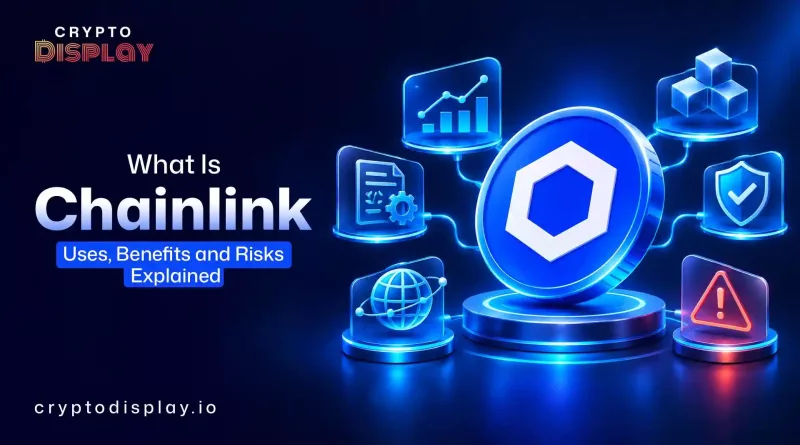
What Is Chainlink and Can LINK Support Future Blockchain Growth?
What Is Chainlink? It is a network that brings real-world data to blockchains. A smart contract cannot see outside its own chain, so it needs a messenger it can trust. it plays that role, and LINK is the token that keeps the system running.
What Is Chainlink (LINK) and Why Does It Matter?
It is a decentralized oracle network. In simple words, it moves outside facts, like prices or weather, into blockchain apps. Sergey Nazarov and Steve Ellis built it, and the whitepaper came out in 2017.
LINK went on sale in an ICO in September 2017 and raised about $32 million. Since then, the project has grown from a small idea into core decentralized finance infrastructure.
Why does it matter? Blockchains only know what is written on their own ledger. The dollar price of ETH, a football score or a shipping update does not live there. Without a bridge, most crypto project apps would be flying blind.
Many lending and trading apps use every day. That wide use is the main reason traders keep LINK on their watchlist, and it is also why beginners keep asking what Chainlink is and how safe it is.
How Does Chainlink Work? A Step-by-Step Explanation
Think of it like a group of reporters checking one story. If one reporter lies, the others catch it. Here is how the flow goes:
- A smart contract needs outside data, such as the BTC price.
- It sends a request to the Chainlink network.
- Independent node operators pull that data from different sources.
- The nodes send their answers back, and the network joins them into one result.
- The final value lands on the blockchain, and the contract reads it.
Why use many nodes? One data source can fail or get hacked. Many sources make cheating hard and costly. Node operators earn LINK for honest work, which gives them a reason to stay clean.
This is how smart contracts get safe inputs. Once the data arrives, the contract acts on its own. It can close a loan, pay an insurance claim or release funds, with no middleman.
What Is the Chainlink Oracle Problem in Blockchain?
A blockchain is trustless, but it still has to trust whatever data it receives. If that data comes from one place, the whole app is only as safe as that one place. This gap is called the oracle problem.
It is not just theory. In 2020, several DeFi apps lost millions after attackers bent a single price source. The code worked as written, but the input was wrong.
It tries to fix this by spreading trust across many nodes and many data sources. No single party decides the answer. That design is the main reason big DeFi apps picked it early.
What Are the Main Uses of Chainlink in Crypto?
Chainlink uses go well beyond price data. Here are the ones that matter most:
- Data Feeds: Lending and trading apps use live prices to value collateral and trigger trades.
- VRF (Verifiable Randomness): Games and NFT drops need fair random numbers. VRF gives a number plus proof that nobody rigged it.
- Automation: Smart contracts cannot wake up by themselves. Automation runs tasks when set conditions are met.
- Proof of Reserve: It checks whether a token has real backing, which helps with stablecoins and wrapped assets.
- Tokenized assets: Banks and asset firms use tools to bring real-world assets on-chain.
Most users never see any of this. They just click a button on a DeFi app, and it works quietly in the background.
What Is the LINK Token Used For?
Chainlink token utility is simple. LINK pays node operators for delivering data. Total supply is capped at 1 billion tokens, so no new LINK can be minted past that limit.
LINK also has a security role. Staking lets holders lock LINK to help protect the network, much like a security deposit. Staking v0.2 went live in 2023 with a 45 million LINK pool, and rewards at launch were around 4.32% a year. Pool size and rates can change, so always check the official page before you lock tokens.
Stakers also carry risk. If the network fails to deliver in certain cases, part of the staked LINK can be cut. Higher rewards come with real downside, and that is worth remembering.
How Does Chainlink CCIP Connect Different Blockchains?
Crypto has many chains, and they do not talk to each other well. Moving tokens across them has often meant using bridges, and bridges have been hacked many times.
The Chainlink CCIP (Cross-Chain Interoperability Protocol) is built to fix this. It sends tokens and messages from one chain to another through the same oracle network. Early access started in July 2023, and it opened to all builders in 2024.
CCIP also uses a separate Risk Management Network. This is a second group of nodes that watches for odd activity and can pause transfers. So there are two layers of checks, not one.
What Makes Chainlink Different From Other Oracle Projects?
Pyth and Band Protocol also offer oracle services, so Chainlink is not alone. Still, a few things set it apart.
First, it has a long live record. It has served DeFi since 2019, and many apps built around its feeds. Second, it supports many blockchains. Third, it sells a full toolkit: prices, randomness, automation, proof of reserve and cross-chain messaging.
There is a trade-off. Some rivals are faster for certain price feeds, and It can feel complex for new builders. Market watchers generally treat it as infrastructure, not a hype coin. That means its value depends on real adoption, not just buzz.
Is Chainlink Worth Watching for Long-Term Crypto Adoption?
For many analysts, yes, because the demand for outside data will not go away. As more banks and apps move assets on-chain, they all need clean inputs.
But the risks are real. LINK price can swing hard like any crypto. Competition is growing. Token demand depends on how much blockchain network usage turns into LINK demand. Regulation can also change fast.
A smart approach is to track real signs: new integrations, CCIP volume and staking changes. Price alone tells you very little.
Disclaimer: This content is for information only and is not financial advice. Crypto is risky and prices can fall fast. Do your own research and speak to a licensed advisor before you invest.



Frequently Asked Questions
 Explore Our FAQs
Find quick answers to commonly asked questions and understand how things work around here.