
What Is GameFi in Crypto and How Play-to-Earn Games Work

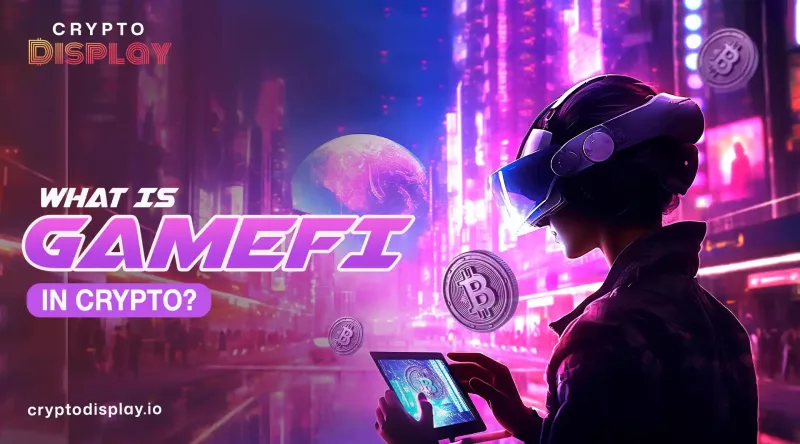
What Is GameFi and How Blockchain Gaming Is Changing the Industry
What if you could get paid just to play video games?
That sounds too good to be true. But it is actually happening right now- and millions of people around the world are doing it every single day.
It is called GameFi. And it is changing how people think about both gaming and money at the same time.
Let us explain exactly what it is, how it works, and what you need to watch out for - in the simplest words possible.
Many investors also track latest GameFi crypto presale projects to find new blockchain games before they launch on major exchanges.
What Is GameFi?
The word GameFi was first used in a 2020 tweet by Andre Cronje, the CEO of Yearn Finance. It combines the words "game" and "finance" - bringing two worlds together that most people never expected to meet.
In simple terms, GameFi refers to blockchain-based games that give players real financial rewards- like cryptocurrency or NFTs- just for playing and making progress in the game.
Think about a normal video game. You spend hours collecting items, building characters, and earning in-game rewards. But when you stop playing, all of that is worth nothing. You cannot sell it. You cannot take it anywhere. It just stays locked inside the game.
GameFi changes that completely. The things you earn inside a blockchain game are real digital assets. You own them. You can sell them to other players. You can trade them on a marketplace. And sometimes - if the game is popular - you can earn serious money doing it.
How Does It Actually Work?
GameFi platforms run on blockchains like Ethereum, Binance Smart Chain, or Solana. Smart contracts handle everything - they record who owns what, pay out rewards, and make sure the rules of the game cannot be secretly changed.
Here is the flow in plain steps:
Step 1 - Download a GameFiii app or open it in your browser. Connect your crypto wallet.
Step 2- Play the game. Win battles. Complete missions. Build things. Make progress.
Step 3 - The game rewards you with tokens or NFTs for what you achieve.
Step 4 - Hold those rewards, sell them to other players, or trade them for real money.
Almost all blockchain games come with their own in-game currency, marketplace, and token system. Players earn tokens by completing tasks - and those tokens have measurable real-world value outside the game.
GameFi vs. Normal Games - The Big Difference
|
Feature |
Normal Games |
GameFi / Blockchain Games |
|
Who Owns Your Items |
The game company |
You- the player |
|
Can You Sell Items |
No |
Yes - on open marketplaces |
|
Earn Real Money |
Not possible |
Yes- through play-to-earn |
|
If the Game Shuts Down |
Items disappear forever |
NFT items remain yours |
|
Who Makes Decisions |
The company |
Players vote together |
In traditional games, players spend money and time but own nothing. GameFii uses NFTs and DeFi to change that - players genuinely own their items, and those items carry real monetary value.
The Play-to-Earn Model
The heart of GameFiii is called Play-to-Earn- or P2E for short.
In play-to-earn games, players receive rewards with real value just by playing and progressing. These rewards come as in-game cryptocurrencies or NFTs that can be sold or traded outside the game world.
Income in GameFi can come from winning battles, completing missions, renting out in-game items to other players, or competing in tournaments. Many projects issue their own tokens, while others use existing cryptocurrencies like Ethereum or Solana.
Some GameFi games are completely free to start. You do not need to spend anything to begin earning. That makes them accessible to people in countries where a small crypto reward is actually meaningful income.
Many investors are also watching top play-to-earn gaming tokens that are gaining traction as the GameFi sector expands.
Games You Should Know About
Three GameFi projects helped this whole space grow into what it is today:
Axie Infinity -Players collect digital creatures called Axies, level them up, breed them, and battle other players. The game uses two tokens -AXS and SLP -and runs on a fast Ethereum sidechain called Ronin.
The Sandbox- A virtual world where players buy, build on, and sell digital land. Brands like Adidas and Samsung have already bought property inside The Sandbox - showing that even big companies take this space seriously. Katten Muchin Rosenman LLP
Decentraland: A 3D world where players own land as NFTs, sell in-game items, and host real events. Major names like Sotheby's own digital spaces there.
How Big Is GameFi Right Now?
The numbers are growing fast.
By 2024, the GameFi market was worth over $16 billion- with growth projections pushing it toward $21.9 billion in 2025.
There are around 3.24 billion gamers in the world right now. Even a small slice of those people moving into blockchain games would create enormous demand for GameFi platforms and tokens. Big brands are paying attention too. FIFA launched its own blockchain and a mobile game called FIFA Rivals in 2025, with Adidas joining as a partner in the Web3 gaming world.
This rapid expansion also reflects the rise of gaming tokens in blockchain games, which are becoming a key part of the digital gaming economy.
The Risks - Be Honest With Yourself
It sounds exciting. But the risks are very real - and many people have lost money here.
Token Prices Drop Fast Many early projects failed because their economies only worked when new players kept coming in. As growth slowed, token prices plummeted, and players who had invested real money lost it quickly.
Projects End Without Warning As funding fell 70% and token prices plummeted, dozens of projects were forced to close by 2025. Poor player retention and unsustainable reward models drained project treasuries quickly.
Scams are everywhere: 73% of GameFi players expressed concern about rug pulls and Ponzi-style mechanics in the sector If a game promises enormous returns with no clear explanation of where the money comes from - walk away.
High Starting Costs Some games make you buy NFT characters just to begin playing. If the game fails, that money is gone.
Benefits vs. Risks - One Clear Table
|
What Works in Your Favour |
What Can Hurt You |
|
Earn real money through gameplay |
Token prices can crash overnight |
|
True ownership of digital items |
Many projects are poorly built |
|
Passive income through staking |
Scams and rug pulls are very common |
|
Players vote on game decisions |
High starting costs on some games |
|
Free-to-play options exist |
Projects can shut down suddenly |
Is GameFi Worth Your Attention?
The market could grow beyond $100 billion over the coming years-contributing to the growth of DeFi, NFTs, the metaverse, and the broader crypto economy.
The core idea is powerful and simple. Your time and skill inside a game should earn you something real- not just points that vanish the moment you log off. That idea connects with billions of people.
But the projects that will last are the ones where the game is actually fun first. When people play because they genuinely enjoy it-and the money is a bonus - that is when it works the way it should.
The ones built purely around earning, with no real gameplay to enjoy, tend to die quickly when the token price drops and new players stop coming.
Watch this space carefully. Try free-to-play options first before spending anything. And if you decide to invest in a token - only ever risk money you are completely fine losing.
Disclaimer
This article is for educational purposes only. Not financial advice. Investments carry significant risk. Always do your own research before making any financial decision.
Frequently Asked Questions
 Explore Our FAQs
Find quick answers to commonly asked questions and understand how things work around here.