
What Is Layer 2 Blockchain and Why It Matters in Crypto

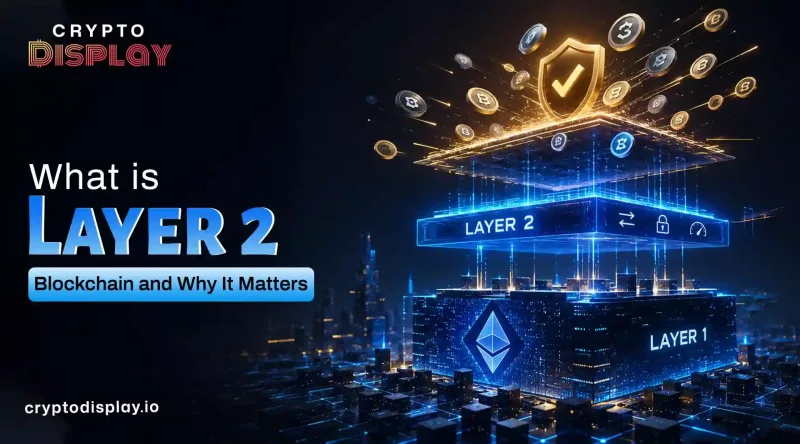
What are Layer 2 blockchain Networks? Make Faster and More Affordable
A Layer 2 blockchain is a network built upon an existing base layer, known as Layer 1 (for example, Ethereum), which aims to make transactions faster, cheaper, and more scalable. While L2 solutions process transactions independently and submit only the results of those transactions back to Layer 1 for security, rather than executing every transaction on the main chain.
Popular Layer 2 networks ensure that blockchain applications are fast and affordable enough for everyday use. It is important because it mitigates the issues with scalability, caters to the sustained demand for decentralized applications, gaming, and payments, while making blockchain technology more accessible by preserving security.
How Layer 2 Actually Works: The Core Mechanics
Think of it this way. Imagine a busy cashier at a grocery store. It is the cashier who handles every single item scanned one by one. It is a self-checkout section that handles 50 customers at once, then sends one combined report to the manager at closing. The key is trust. It has to prove it did the work correctly. That is where the two main approaches split.
- Optimistic Rollups- Optimistic rollups assume all transactions are valid unless someone challenges them. If no fraud proof is submitted within a window (usually 7 days), the batch gets finalised on L1.
- ZK-Rollups- Zero-knowledge rollups use cryptographic proofs to validate transactions instantly. There is no waiting period. The math proves correctness before anything is submitted.
- State Channels- State channels let two parties transact directly with each other off-chain, opening and closing a channel on tier 1. Bitcoin's Lightning Network is the most well-known example. These are ideal for high-frequency, peer-to-peer payments, but are not flexible enough for complex decentralized Finance operations.
- Plasma- Plasma was an earlier scaling approach that creates child chains attached to Ethereum. It has largely been replaced by rollups due to limitations around data availability and complex exit mechanisms.
Why This Matters for Traders, Not Just Developers
Most retail crypto users still think Layer 2 is a technical topic they can skip. That is a mistake. If you use a Decentralized Exchange, lend or borrow assets, or hold any position in DeFi, you are either already using L2 or paying more than you need to because you are not. Gas costs directly eat into trade profitability. A $200 trade on Ethereum mainnet might cost $8 in fees. The same trade on Arbitrum costs $0.25. Over a hundred trades, that difference is nearly $800.
Liquidity is also shifting. As more protocols deploy on Layer 2, the deepest pools and best rates are no longer always on mainnet. Uniswap's Arbitrum pools regularly match or exceed mainnet volume on many trading pairs. For crypto presale investors, many new projects are launching natively on L2 networks. Token generation events on Base, zkSync, or Arbitrum settle faster and cost less to participate in. If you are still only watching mainnet launches, you are watching a smaller market.
The Risks Layer 2 Still Carries
- Bridge risk is the biggest one. Moving assets from Ethereum to a Tier 2 requires a bridge contract. These smart contracts have been hacked before. The Ronin bridge lost $625 million in March 2022. The Nomad bridge lost $190 million in August 2022. Bridge security has improved significantly since, but the attack surface still exists.
- Sequencer centralisation is another concern. It runs a single sequencer that orders transactions. If that sequencer goes down or acts maliciously, there is a problem. Arbitrum and Optimism are both working toward decentralised sequencers, but neither has fully shipped that yet as of mid-2025.
- Liquidity fragmentation is a growing issue. With dozens of Tier 2 networks running, liquidity gets split across all of them. A token might have deep pools on Arbitrum but thin liquidity on zkSync.
What Layer 2 Looks Like in 2026
The Ethereum ecosystem is moving toward a rollup-centric roadmap. Vitalik Buterin has written publicly that the end state of Ethereum is essentially a settlement for rollups.
On the competition side, Solana and other high-throughput Tier 1 chains make a different bet: process everything natively on one fast chain. The trade-off is different security and validator assumptions. Tier 2 on Ethereum inherits Ethereum's security. Solana's speed comes from a different architecture with its own trade-offs.
Disclaimer
This content is for informational purposes only and does not constitute financial or investment advice. Crypto assets carry significant risk. Always do your own research before making any financial decisions. Past performance does not guarantee future results.

Frequently Asked Questions
 Explore Our FAQs
Find quick answers to commonly asked questions and understand how things work around here.