
Create a Token Sale in 48 Hours: Step-by-Step Launch Guide

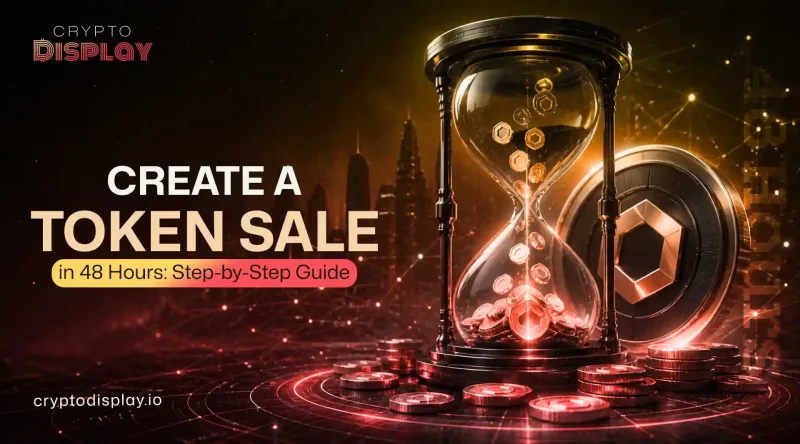
Rapid Deployment: Your 48-Hour Checklist for a Successful Token Sale
Launching a crypto token used to take months of coding and a massive team. In 2026, things will be different. Tools have gotten faster, but the risks are still there. If you have an idea and want to start a token sale quickly, you can actually do it in about two days if you stay focused. This guide is for people who are just starting out. If you want to understand the bigger picture first, you can also explore blockchain technology and crypto future trends before you start. We aren’t going to use big words. We are just going to look at the steps to get from an idea to a live sale without getting stuck in the mud.
Choosing Your Chain and Standard
The first thing you have to do is pick where your Token Sale will live. Think of a blockchain like a neighborhood. Some neighborhoods are expensive but very popular. Others are cheap but have fewer users.
1. Ethereum
Most people still use Ethereum. It is the biggest neighborhood. In 2026, the Ethereum Token Launch Kit v2.3 has made this much easier. It uses the ERC-20 standard. This is just a set of rules that tells the token how to move from one wallet to another. Ethereum is very safe, but the "gas fees" (the cost to do things) can still be high when the network is busy. Before you choose, you can also check out the best Ethereum tokens for the next trend to see what is already working.
2. Binance Smart Chain
If you want something cheaper, many beginners look at Binance Smart Chain (BSC). It uses the BEP-20 standard. It works almost exactly like Ethereum, but it costs much less to send tokens. This is good if your users don't have a lot of money to spend on fees.
3. Layer 2s (Base, Arbitrum, Optimism)
These are like "side streets" connected to Ethereum. They are very fast and very cheap. In 2026, many new projects are launching here because it combines the safety of Ethereum with the low cost of BSC.
Tokenomics
Tokenomics is just a fancy word for how money works. You need to decide how many tokens will ever exist and who gets them. If you mess this up, nobody will want to buy your token. If you are unsure, you can learn from real projects and trends to understand how good token setups work in real life.
Keep it simple. Here is a basic way to split them:
- Public Sale- 40% (This is what you sell to raise money)
- Liquidity- 30% (This stays in the "pool" so people can trade)
- Team: 10% (This is for you, but keep it locked for a year so people trust you)
- Marketing- 10% (To pay for ads and influencers)
- Ecosystem/Rewards- 10% (To give to users who use your app)
Pro Tip: Don't make quadrillions of tokens. It looks like a scam. Stick to a number people can understand, like 100 million or 1 billion.
Audit and KYC: Don't Skip This
This is the part where most people fail. Because there are so many scams in crypto projects, people are scared.
What is an Audit?
An audit is when a smart person (or a company) looks at your code to make sure there are no "backdoors" where you can steal the money. Even if you use a template from PinkSale, a quick audit adds a lot of trust.
What is KYC?
KYC stands for "Know Your Customer," but for a founder, it means "Know Your Dev." You show your ID to a private company. They don't tell the public who you are, but they give you a "verified" badge. If you run away with the money, they can tell the police. Having a KYC badge makes people feel 100% safer.
The 48-Hour Marketing Checklist
You can't just launch a token and hope people find it. You have to tell them about it. But since you only have 48 hours, you have to be fast.
- Twitter (X)- Start an account. Post your "Whitepaper" (which can just be a simple Google Doc explaining the project).
- Telegram/Discord- You need a place for people to ask questions. Be there to answer them. If you aren't there, people will think the project is dead.
- Countdowns- People love a countdown. It creates "FOMO" (Fear Of Missing Out).
- Reach out to "Call Channels"- These are groups on Telegram that talk about new tokens. Be careful, many of them are fake. Look for ones with real comments.
Step-by-Step Execution Plan
Day 1: The Foundation (Hours 1-24)
- Morning- Decide on your name, symbol (like $CAT or $DOG), and total supply.
- Afternoon- Use a tool like the Ethereum Token Launch Kit to deploy your smart contract on a "Testnet" first. This is a fake version of the blockchain where the money isn't real. It lets you see if it works.
- Evening- Set up your social media. Write a simple post about why your token exists. Does it help people? Is it a game? Be honest.
Day 2: The Launch (Hours 25-48)
- Morning- Deploy to the "Mainnet" (where real money is).
- Midday- Go to your chosen Launchpad. Upload your logo and description. Set your "Soft Cap" (the minimum money you need) and "Hard Cap" (the maximum you will take).
- Afternoon- Double-check your dates. Make sure the sale starts at a time when people are awake (check US and Asia times).
- Evening- Start the sale! Stay in your Telegram chat. Talk to people. Be nice.
Important Safety Warning
This is the Your Money Your Life (YMYL) part. Crypto is full of people trying to take your money.
- Never give your Seed Phrase to anyone. No website needs it to launch a token.
- Audit your code. If you don't know how to read code, use a trusted template.
- Be honest with your buyers. If things are going slowly, tell them. Trust is the only thing that keeps a token alive after the first day.
Conclusion
Creating a token in 2026 is a lot like starting a small business. It's easier to set up the shop, but it's still hard to get customers to walk through the door. If you follow the steps, pick a chain, set fair tokenomics, get a basic audit, and use a launchpad, you can get it done in two days.

Frequently Asked Questions
 Explore Our FAQs
Find quick answers to commonly asked questions and understand how things work around here.