
Crypto Rug Pull Checker: 10 Checks Before You Connect Wallet

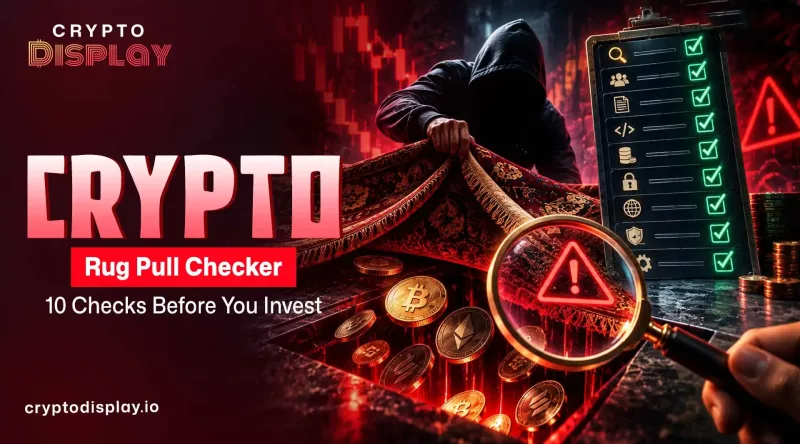
Crypto Rug Pull Checker: 10 Wallet Safety Checks for September 2026
This blog explains what a crypto rug pull is and why checking a token before connecting your wallet matters. It covers 10 essential safety checks, including liquidity locks, owner control, mint functions, wallet concentration, audits, and sell restrictions. It also shows how tools like RugCheck, Token Sniffer, De.Fi, and DexScreener can help identify warning signs. Most importantly, it explains why no crypto rug pull checker can guarantee a project is completely safe.
What Is a Crypto Rug Pull?
A crypto rug pull happens when a team takes the money and runs. One day the price is going up. The next day the money is gone. The website is down. The chat group is dead.
The name comes from an old saying. Someone pulls the rug out from under you, and you fall. That is what happens to buyers when it dies overnight.
This is not a rare event. Chainalysis found that rug pulls made up 37% of all scam money in 2021, worth over $2.8 billion. DappRadar saw a new pattern in 2025. Rug pull events dropped 66% from the year before, down to seven in the first part of the year. But total losses jumped to almost $6 billion, mostly from one big crash. Fewer scams. Bigger damage.
Memecoins are the top risk right now. DappRadar analyst Sara Gherghelas said scams have moved away from decentralized finance apps and NFTs toward memecoins, often run by teams with slick branding. One clear case is the Libra (LIBRA) token on Solana. It hit a $4.56 billion market cap after a public figure posted about it online, then fell more than 94% in hours.
This is why a rug pull checker matters so much. It gives you facts, not guesses, before you risk your cash.
How Does a Crypto Rug Pull Checker Work?
A crypto rug pull checker reads the token's code. It also reads how it moves on the blockchain. It does not care about hype or big follower counts. It looks at code and wallet moves only.
Tools like RugCheck and Token Sniffer pull this data straight from the chain. Token Sniffer alone scans over 2 million tokens across 12 chains. It checks for the same patterns seen in past scams.
Here is what a good smart contract checker looks for:
- Mint power: can the team make endless new tokens out of thin air?
- Owner control: did the team give up control, or do they still hold the keys?
- Locked funds: is the trading pool locked, and for how long?
- Sell test: can buyers actually sell, or is it a trap?
- Wallet spread: do a few wallets hold most of the coins?
Each check turns into a score, often from 0 to 100. A low score is a warning. It does not mean the token will fail. But it means you should look closer before you buy in.
10 Checks Before Connecting Your Wallet
Run this list every time. Do it even for tokens your friends are hyping up.
- Check the liquidity lock. A liquidity checker crypto tool shows if funds sit locked or free for the team to grab. No lock means no trust.
- Look at owner control. If the team still holds admin power, they can change the rules at any time.
- Scan for mint powers. A hidden mint function lets the team print new coins and dump them on buyers.
- Test if you can sell. Some contracts let you buy but block every sell order. A small test trade catches this fast.
- Check who holds the coins. If the top ten wallets hold more than half the coins, one big sale can crash the price.
- Look for a real audit. A true audit from a known firm gives real proof. A promise on a website does not.
- Search the deployer's past wallets. Many scammers reuse old wallets tied to dead projects. This is basic rug pull detection.
- Watch the trading pattern. High trading with almost no real buyers often points to bots, not people.
- Check the team's identity. A team you can find and check adds real wallet security. A fully hidden team adds more risk.
- Use more than one checker. No single tool catches every trick, so run the token through a second one too.
How to Check a Crypto Token Before Buying
Start with the contract address, not the flashy homepage. Paste it into a smart contract checker like RugCheck, De.Fi, or Token Sniffer. Read the full report, not just the top score.
Next, learn how to check token liquidity before buying. Open the token's trading pair on a tracker like DexScreener. Confirm the pool is locked. Check the unlock date if one shows up. A pool that unlocks in two days is not safe, no matter what the score says.
Look at the price chart too. A steady climb with real trading looks nothing like a sharp spike with only a few wallets trading back and forth. That second pattern often means fake trades made to look like demand.
Last, read the group chat, but do not trust it blindly. Ask hard questions. Real teams answer them. Crypto scam teams delete hard questions or kick you out for asking.
Can a Crypto Rug Pull Checker Guarantee a Safe Token?
No tool can promise a token is 100% safe. A crypto rug pull checker reads on-chain facts. It cannot read a person's plan to quit next month and vanish.
Solidus Labs, the firm behind Token Sniffer, studied over seven million tokens on Pump. fun. It found that 98.6% of them fell below $1,000 in pool funds. That number shows a crash, not proof of a scam in every case. Some tokens fail from bad timing or low demand, not a planned trick.
Think of this kind of checker as one layer of safety, not the whole wall. A high score means you can dig deeper with more trust. A low score means you should stop right there.
Crypto Rug Pull Checker Checklist
Save this list. Run it before every new project.
- Pool funds are locked, and the unlock date is checked
- Owner control is given up or clearly explained
- No hidden mint power in the code
- Sell test passed, no trap found
- Top wallets do not hold most of the coins
- A real audit exists from a known firm
- Deployer crypto wallet has no history tied to dead projects
- Trading matches real buyer activity, not bots
- Team identity checked where you can
- Confirmed with a second rug pull scanner tool
Disclaimer: This article is for learning only. It is not financial advice. Crypto assets carry high risk, including full loss of funds. Always do your own research. Talk to a licensed financial advisor before you buy any crypto project.
Frequently Asked Questions
 Explore Our FAQs
Find quick answers to commonly asked questions and understand how things work around here.