
How Crypto Liquidity Works and Why Every Trader Should Care

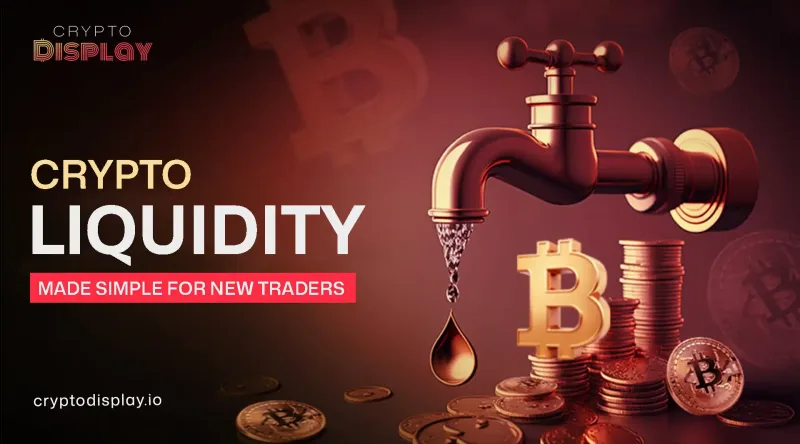
How Crypto Liquidity Changes Market Movement and Price Action
Many new traders hear the word liquidity all the time. It pops up in apps, charts, and chats. But most people never pause to ask what it really means. In the crypto world, the idea is not hard. It just sounds a bit fancy. When we talk about crypto liquidity, we are really talking about how easy or hard it is to buy or sell a token without messing up its price too much.
Let’s break this down in slow steps. No rush. Just simple ideas that help you understand the market better.
What Liquidity Means in Daily Life
Think about a small shop that sells cold drinks. If the shop has many bottles and many people buying them, you can get a drink fast. The price stays the same for all. That shop has good liquidity.
Now think of another different shop with only one bottle left. If two people want it, someone has to pay more or leave without one. That shop has low liquidity.
It is the same with crypto tokens. When there is a lot of buying and selling going on, the market feels smooth. When there is not much activity, things feel stuck.
This is the first layer of understanding liquidity.
How Crypto Liquidity Works in Trading
Crypto tokens live on exchanges. Each exchange has an order book or a pool. These hold the buy and sell orders. If there are many orders and enough people trading, the project becomes easy to move. You can buy or sell without waiting too long.
In low-transaction-flow markets, even a small trade might change the price. This can surprise new traders. They expect the price to stay stable, but the order book may be thin. And when the order book is thin, a simple trade can push the price up or down suddenly.
This is why crypto flexibility is one of the first things traders check before entering a market.
Where Liquidity Comes From
It can come from different places:
Users who trade often- Normal buyers and sellers help keep the market alive.
Market makers- These are people or teams who place buy and sell orders to keep the market active. They help avoid big price jumps. They are common in bigger exchanges.
Pools- In some tokens, people lock their tokens in a pool. This pool is used for trading. The more tokens inside, the easier the trading feels. This model is popular in decentralized exchanges.
If no one adds tokens to the pool, or if traders stop trading, the pool becomes small. That reduces crypto flexibility again.
Why Liquidity Matters for Any Token
Imagine you bought a token because you liked its idea. Later, you want to sell it. If it has high trasaction flow, you can sell it fast. If the project has low flow, you might wait for hours or even days. Sometimes you must accept a lower price just to exit the trade.
This is not about hype or promotion. It is simply how markets work. If the token may have a good plan or decent tech. But without strong activity in the market, its trading can still feel slow.
Good trasaction flow does not mean a project is good. Low flexibility does not mean it is bad. It only tells you how fast and smooth the trade might be.
This is another place where trasaction flow shows its value.
How To Check Liquidity Before Trading
Many new traders jump into tokens without checking anything. A quick look at a chart is not enough. You can check flexibility in a few calm steps:
- Look at trading volume- Higher volume means more activity. It is not perfect, but it gives a clue.
- Check the order book -If buy and sell orders look empty, the market may be thin.
- Check the size of the pool - In decentralized exchanges, this number sits on the token’s pair page. A tiny pool means any trade can shift the price.
- Test with a small trade- If the price moves too much on a small trade, the transaction ease is low.
These simple checks help you avoid sudden surprises when using this in real life situations.
How Liquidity Impacts Price Movement
Low transaction ease means unstable prices. High flexibility means prices move in a smoother way. This is because the sector has more tokens sitting around, ready for trade. When people trade in a sector with strong cryptocurrency flexibility, trades slip into place without shaking the chart.
In a low-flexibility sector, even one large wallet can push the chart up or down. You might think the coin is booming or crashing, but sometimes it is just a single trader shifting things.
This can confuse beginners, so it helps to stay calm and look at the flexibility first.
Example: A Simple Token Scenario
Let’s say a new crypto projects launches. It has a small team. They put only a tiny part of the supply into a flexibility pool. Maybe only a few thousand dollars’ worth. At first, the coin may look fine. A few traders buy. A few traders sell.
But as more people enter, the pool cannot handle big orders. Prices jump around. A trader who buys $100 of the token may push the price up. Another trader who sells $80 may drop the price again. It feels unstable.
This does not mean the token is bad. It just means the sector is too small. As the team and community adds more funds, the pool grows. Slowly, the trading becomes smoother. Step by step, crypto flexibility improves.
This is how a real token grows in the early days. Not in a straight line. More like slow steps.
Why It Changes Over Time
It is not fixed. It moves with the conditions. Some days the ecosystem is active. Some days it is quiet. If news hits, more people join in. If the market is dull, the trading slows.
Another thing that affects crypto flexibility is how many holders keep their tokens in wallets without trading. If everyone holds and no one trades, the market feels empty even if the token has many users.
And if people stake tokens in long-term staking pools, that also reduces the amount of tokens available for trading.
Nothing stays constant. It shifts with the mood of the related sector.
Key Things New Traders Should Remember
Here are a few ideas to keep in mind:
- flexibility tells you how easy it is to trade.
- High trasaction ease avoids sudden price jumps.
- Low trasaction ease can make trades risky for beginners.
- Always check the pool or order book before you trade.
- Do not assume a token is strong or weak only because flexibility changes.
When you keep these simple ideas in mind, It becomes less scary and more useful in daily trading.
Final Thoughts
It is not a big idea. It is a part of how markets stay smooth. When you take a moment to check it before buying or selling, you make better choices. No rush. No hype. Just a small check that helps you understand how the it flows around you.
As you explore more tokens, you will see how transaction ease shifts from day to day. With time, your eye will catch these patterns naturally. And that alone can make you a more steady and patient trader.
Disclaimer
This content is for informational purposes only. It is not financial advice. Always do your own research (DYOR) before investing in cryptocurrency



Frequently Asked Questions
 Explore Our FAQs
Find quick answers to commonly asked questions and understand how things work around here.