Token Burning and Its Role in Long-Term Project Planning

Why Token Burning Was Created and Why Crypto Projects Use It Today
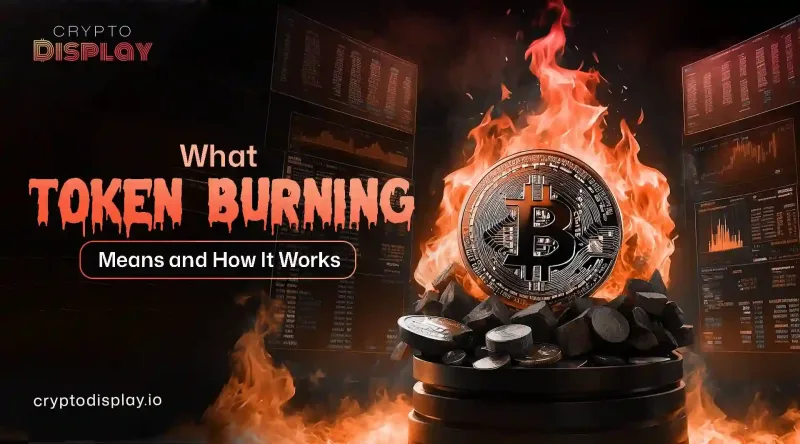
Token burning is a common idea in the crypto world. Many people hear about it but do not fully understand what it means or why projects do it. This guide explains token burning in very simple words so anyone can read and understand it with ease.
This article is written for learning only. It does not give financial advice. Always do your own research before making any money choice.
What Is Token Burning?
It means removing crypto forever.
When cryptos are burned, they are sent to a special wallet that no one can use. This wallet has no private key. That means no one can take back it or spend them again.
Once these are burned, they are gone forever.
Think of it like tearing paper money and throwing it away. The money can never be used again. In the same way, burned cryptos are removed from the total supply.
Why Is It Important?
You know, it is a way to manage how many of them are out there. When there are just too many projects floating around, each one can end up being worth less. So, by getting rid of some cryptos, projects aim to keep things balanced.
Here's why it's pretty straightforward that it is important:
- It cuts down on the total number of cryptos available.
- It can help keep inflation in check.
- It shows long-term planning.
- It can build user trust.
- It may support price balance
It does not promise profit. It changes supply. Price still depends on demand and real use.
How Does It Work?
It follows clear steps on the blockchain. Everything is open and can be checked by anyone.
Step 2: Tokens Go to a Burn Wallet
The cryptos are moved to a public wallet that cannot be opened or used by anyone.
Step 3: The Burn Is Logged
The blockchain records the event. Anyone can view this record.
Step 4: Supply Drops
Once the process is complete, the total number of cryptos is reduced.
What Is a Burn Wallet?
A burned wallet is a public blockchain address with no private key.
This means:
- No one owns it.
- No one can unlock it.
- Coins sent there are stuck forever.
Many burned wallets use easy-to-read addresses like 0x000000000000000000.
Types of Token Burning
There are different ways projects use this process. Each method has a different goal.
- Manual Burn: The team burns tokens at set times. This happens monthly or yearly.
- Automatic Burn: Smart contracts remove tokens on their own during actions like trades or transfers.
- Buyback and Burn: The project buys tokens from the market and then destroys them.
- Transaction Fee Burns: A small part of every transaction is burned automatically.
Each method depends on the project design.
Is It Good or Bad?
It is not good or bad. It is just a tool.
It can be useful when:
- The project has real use.
- The rules are clear.
- The process is public.
- The supply plan makes sense.
It can be risky when:
- There is no real product.
- Burns are used only for hype.
- The team gives false promises.
Always look at the full project, not just the burn.
Does Crypto Burning Increase Price?
It does not guarantee price growth.
Price depends on:
- Demand
- Use case
- Trust
- Market conditions
It only reduces supply. If people do not want the crypto, the price may not rise.
This is important for user safety and smart decision-making.
Token Burning vs Token Locking
These two ideas are different.
- Cryptos are destroyed.
- supply goes down forever.
Crypto Locking
- Coins are locked for a time.
- Supply stays the same.
- coins can return later.
Both are used for control, but they work differently.
How Can Users Check It?
Users can check this easily by using a blockchain explorer.
You can:
- Search the token address.
- Look for burned wallet transfers.
- Check total supply changes.
This helps users stay informed and avoid false claims.
Some Common Myths
Let’s clear some simple myths.
Myth 1: Burningalways makes price go up
This is not true. Demand matters more.
Myth 2: More burns means better project
Not always. usage and trust matter more.
Myth 3: Burned coins can return
False. Burned coin are gone forever.
Is Burning Safe?
This process itself is safe because it happens on the blockchain. The risk comes from poor projects, not from this method.
For safety, users should:
- Read the project plan.
- Check its rules.
- Avoid hype-only tokens.
- Never invest blindly.
This is important for money-related topics and for user protection.
Real world example
Think of a project that begins with 1,000 tokens. Later, the team removes 200 tokens forever.
Now what happens:
- Total supply becomes 800
- The 200 removed tokens can never be used again
- This update is public and cannot be changed
Why Projects Share Token Burning News
Projects often talk about this process so users can clearly see what is happening.
A clear plan can:
- Help build trust
- Show future planning
- Lower worries about too many coins.
Still, users should always check the facts instead of trusting words alone.
Key Things to Remember
Here are the main points in easy words:
- It means they are permanently removed.
- It lowers the total number of coins.
- It is recorded on the blockchain.
- It does not promise profit.
- It works best with real use.
Final Thoughts
Basically, It is a straightforward yet pretty effective concept in the crypto world. It's a way to manage how many coins are out there and signals that the project is thinking ahead. Burns on its own would not automatically make a project a winner.
Users should always focus on:
- Real use.
- Clear rules.
- Honest teams.
- Long-term value.
Understanding it helps users make better and safer choices in the crypto space.
Disclaimer
This content is for education only. It does not give investment advice. Crypto involves risk. Always do your own research (DYOR) before making decisions.