
What Is BNB? How Binance Coin Works, Uses, and Risks in 2026

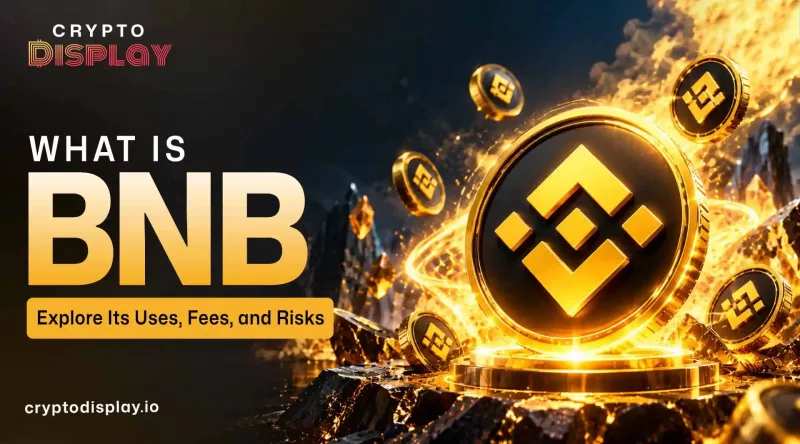
What Is BNB? Explore Its Uses, Staking Rewards, Gas Fees, and Risks
This coin powers Binance and BNB Chain. People use it to pay fees, trade, and join new crypto projects. Still, many beginners ask the same thing: what is BNB, and is it safe to hold?
This guide answers that in simple words. You will see how it works, what it costs to use, how staking and burns work, and where the risks sit. Prices here are from mid-October 2026, so check live rates before you act.
What Is This Coin and Why Does It Matter in Crypto?
What is BNB? It is the native coin of BNB Chain, built by the team behind Binance, one of the biggest crypto exchanges by trading volume.
It launched in July 2017 as a fundraising token with a 200 million supply. It first lived on Ethereum. In April 2019, it moved to its own chain. The name once meant Binance Coin. Today it stands for Build N Build.
In mid-October 2026, it traded near $740, and the market cap was close to $99 billion. That keeps it in the top five coins by size. But it sits well below its October 2025 peak of $1,370. The coin moves with the market like any other crypto asset.
How Does BNB Work? Inside the Ecosystem
It runs on validators. These are node operators who lock up tokens to help confirm blocks. Honest work earns fees. Bad behavior can cost them their stake.
The main network is BNB Smart Chain. It works with Ethereum apps and wallets, so a developer can move an app over with few changes. That is a big reason so many DeFi apps and games live there.
There is also opBNB, a layer 2 network built for cheaper and faster activity. Blocks on the main chain now arrive in under a second, which helps traders who need quick fills.
What Is It Used For? 7 Real-World and Crypto Use Cases
Here is where the coin shows up in daily crypto life:
- Gas fees: Every action on BNB Chain, from a swap to an NFT mint, needs to pay for the work.
- Trading discounts: Paying Binance fees in BNB can cut spot trading costs by up to 25%.
- DeFi: Lending, swapping, and liquidity pools often use it as a base asset.
- Staking: Holders can lock their coins with validators and earn rewards.
- Token launches: Binance has run programs where holding or locking the coin gives access to new tokens. Rules change, so read each program's terms.
- Payments: Binance Pay and some merchants accept it for purchases and gift cards.
- Games and NFTs: Many games and NFT markets run on BNB.
BNB vs Binance: Are They the Same?
No. Binance is a company that runs an exchange. It is a coin. You can hold it in your own wallet without a Binance account, and it still works.
But the two are linked. Binance created the coin, gives it free perks, and runs the burns. So trouble at the exchange can hit its price. Legal pressure on Binance in past years pushed its value down along with it.
Gas Fees Explained: How Much Does a Transaction Cost?
Gas is the fee you pay to send tokens or use an app. Since October 2025, the minimum gas price is 0.05 Gwei. For most users, that means a transaction costs about half a cent.
The cuts started at 3 Gwei in early 2024. That makes the current level nearly 98% lower. Cheap fees pulled in more traders, and daily transactions passed 12 million at one point.
Low fees do not mean zero cost. Busy periods can push them up. And very low fees can invite spam. Keep a little in your wallet at all times, or your tokens can get stuck.
Staking Explained: Can You Earn Rewards With This Coin?
Yes. Staking rewards come from locking your coins with a validator on Binance Chain, or from a staking product on an exchange listing. In return, you get a share of network rewards.
Rates change often and usually sit in the low single digits per year. If an ad promises high fixed returns, be careful. Staking also has a waiting period, so you may need several days before you can sell. Rewards are paid in the same coin, too. A price fall can wipe out the gain.
What Is a Token Burn? Can Burns Increase Its Value?
A burn sends coins to an address nobody can use. They are gone for good. Binance set a goal to cut the 200 million supply down to 100 million.
Two systems do the work. The quarterly Auto-Burn removes coins based on the coin's price and how many blocks the chain made. A second system burns part of every gas fee in real time. The 34th quarterly burn, in January 2026, removed about 1.37 million tokens and brought supply near 136 million.
So can burns raise the price? Not on their own. Less supply helps only if demand holds. The coin still trades far below its 2025 high after more than 30 burns. Think of burns as a slow tailwind, not a promise.
BNB vs Ethereum vs Solana: Which Crypto Has More Utility?
|
Network |
Strength |
Weak spot |
|
BNB Chain |
Low fees, large Binance user base |
Smaller validator set, tied to one company |
|
Ethereum |
Deepest DeFi, most developers, strong security |
Higher fees on the main chain |
|
Solana |
Very fast, low fees, busy trading scene |
Past network outages |
Analysts often say BNB Chain wins on cost and reach, Ethereum on trust and depth, and Solana on speed. A crypto coin with more utility is not always the coin with the better price. Those are two different questions.
Disclaimer: This article is for education only and is not financial advice. Crypto prices are volatile, and you can lose your full investment. Do your own research and speak to a licensed adviser before you invest.
Frequently Asked Questions
 Explore Our FAQs
Find quick answers to commonly asked questions and understand how things work around here.