
What Is Dogecoin (DOGE)? How It Works, Uses, Risks Explained

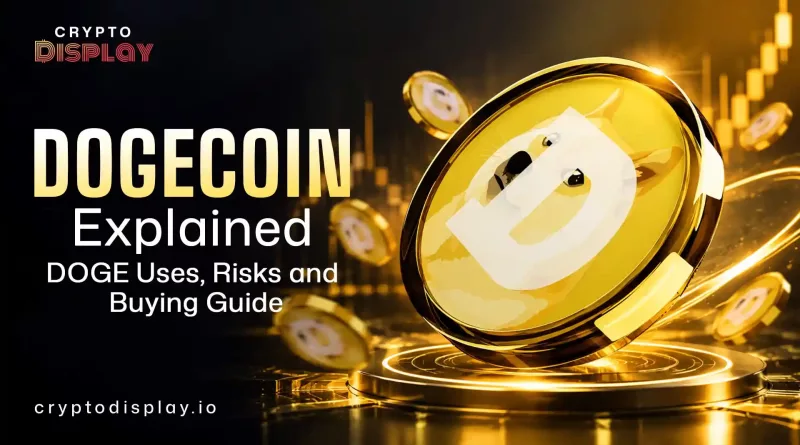
What Is Dogecoin? How This Meme Coin Works and Where You Can Buy DOGE
Dogecoin started as a joke, but it never went away. Today, DOGE is a digital coin that people use to tip, pay, and send money across borders. It runs on a public blockchain, and it has a loud, friendly community behind it. Many beginners ask the same thing: is it just a meme, or does it have any real value? This guide answers that in plain and simple words. You will learn how it works, how to buy and store it, what it can do in daily life, and where the risks sit before you spend even a single dollar.
What Is Dogecoin (DOGE)? A Simple Guide to Its Uses, Risks, and Future
It is easy to joke about and harder to explain well. The sections below cover the basics first, then the parts you should check before putting money in.
What Is Dogecoin (DOGE) and Why Was It Created?
it is an open-source, peer-to-peer digital currency. Open-source means anyone can read its code. Peer-to-peer means people send coins to each other without a bank in the middle.
Its face is the Shiba Inu, a Japanese dog breed that became an online meme. Jackson Palmer and Billy Markus created it, and it began as a joke. People still put it to use fast, mostly to tip strangers online and to cheer on odd causes.
Markus worked alone as the developer on the first Core releases. The community later grew around a simple saying: Do Only Good Everyday. The project’s homepage currently lists Core 1.14.9 as the latest wallet release.
How Does Dogecoin Work on Its Blockchain?
It runs on blockchain technology. Think of it as a shared notebook that everyone can read, but nobody can quietly change. Computers called nodes each keep a copy and keep it up to date.
New pages in that notebook are called blocks. Miners add them using Proof of Work, which means they solve hard computer puzzles and earn Dogecoin as pay. Many miners join pools to combine their computing power. The block reward is listed at 10,000 DOGE.
Here is why people like it for payments. Fees are very small, and confirmations come fairly fast. If you send money to someone in another country, you skip the bank and the foreign exchange fees that usually come with it.
What Makes Dogecoin Different From Bitcoin?
Both coins use Proof of Work, but their supply plans differ. Bitcoin’s new coins are set to stop completely in 2140. Dogecoin’s new coins never stop. Even so, supply is not unlimited at any moment, because there is a firm limit on coins issued per block, per day, and per year. It only looks endless if you wait forever.
The team says steady issuance pays miners and keeps the network safe. In their view, a hard cap would leave the network open to attacks. It also skips coin burning, a trick some newer tokens use to push prices up.
Expert view: Crypto Market analysts usually treat DOGE as a spending and community coin, not as a scarce store of value like a capped asset. That is a fair way to judge it. A coin built for tipping and payments gets its worth from use and attention, and attention can fade fast.
How Can You Buy, Send, and Store DOGE?
The most common way to get DOGE is a crypto exchange, where you swap regular money for coins. You can buy at the current price, or set a price and wait for the market to reach it. Other routes include tips, getting paid in DOGE for goods or services, mining, and community projects.
Next, pick a wallet. A custodial wallet means another company holds your private key, like an exchange account. A non-custodial wallet means you hold the key yourself. The saying “not your keys, not your coins” comes from this. A hot wallet is online. A cold wallet, like a hardware wallet, stays offline.
Simple steps:
- Choose a wallet that fits how you plan to use DOGE.
- Back it up and store your seed phrase offline.
- Buy DOGE on an exchange you have researched.
- Move coins you will not trade into a non-custodial wallet.
Never share your seed phrase or private key. Fees are close to zero, so many people keep one crypto wallet for savings and another for daily spending.
Does Dogecoin Have Real-World Utility Beyond Memes?
Yes, though the proof is mostly small, everyday uses. Dogecoin began as a tipping coin on Reddit, where bots like SoDogeTip let users send small amounts to each other. The community has also raised money for causes, from clean water wells in Kenya in 2014 to the #TeamSeas cleanup drive in 2021.
Shopping is the newer part. Third-party payment providers now let online stores accept DOGE, and some prepaid cards can be loaded with it. Shops can also connect straight to the blockchain through its JSON-RPC interface. The Dogecoin Foundation says it plans to build shared code libraries to make this easier.
A fair warning: most of these claims come from the Dogecoin project itself. Before you count on a store or card, test it with a tiny amount first.
Is Dogecoin a Good Long-Term Investment?
Nobody can promise that. Dogecoin has real strengths, but its price leans heavily on crowd mood, and that can turn quickly. Here is what to weigh:
- Supply keeps growing: New coins never stop, so demand has to keep up for the price to hold.
- Mood drives price: Memes and social buzz can lift it, and the same buzz can leave.
- Big wallets: The crypto project says many top wallets are exchange or service wallets, not lone whales. Still, check the data yourself on a chain explorer.
- Security: Exchange hacks and lost keys are real ways to lose money.
A careful approach is to use money you can afford to lose and buy in small parts over time. Long-term holders often prefer cold storage for coins they do not plan to spend.
Disclaimer: This article is for information only and is not financial, investment, or legal advice. Crypto prices swing hard, and you can lose all your money. Do your own research and speak to a licensed adviser before you invest.



Frequently Asked Questions
 Explore Our FAQs
Find quick answers to commonly asked questions and understand how things work around here.